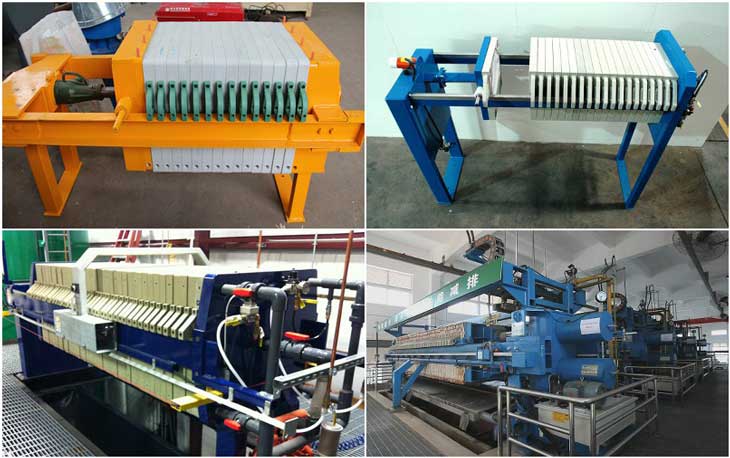
Oil Filter Press
Filter Press for Small Oil Pressing Workshop
Crude (freshly extracted) oil contains moisture, and fiber, resins, colors etc. From the plant material, which make it darker and more opaque. These materials are removed by clarification – either by letting the oil stands undisturbed for a few days and then separating the upper layer, or by using an oil filter. The oil is filtered through a cloth and heated briefly to 100°C to boil off any remaining traces of moisture. This is usually sufficient to meet the quality needs of customers and give a shelf life of several months when correctly packaged. However, the oil requires additional refining stages of de-gumming, neutralising and de-colouring to have a similar quality to commercially refined oils, and these stages are difficult to complete at a small scale.
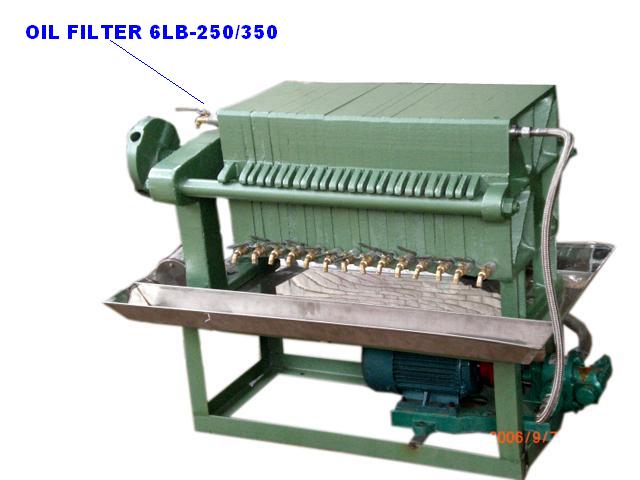
Working principle of oil filter
In operation, the crude oil enters the filter press chamber through the pump at a rate of 100 psi to 900 psi. The oil is filled into each plate frame chamber and then flowed through the drainage area of the cloth medium.Gravity drainage field generated by the pressure and pump pressure combined to produce a pressure difference, resulting in a solid cake thickening and accumulation.The filtered oil is discharged through the outlet.
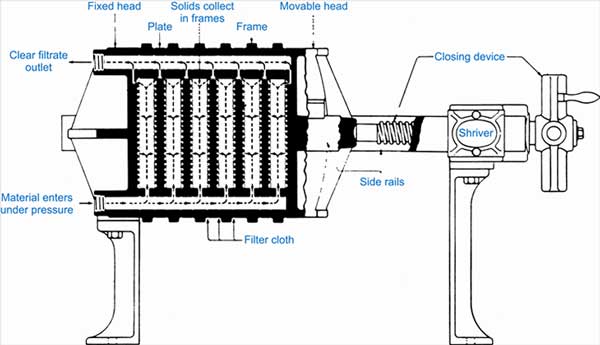
6LB series Filter Press
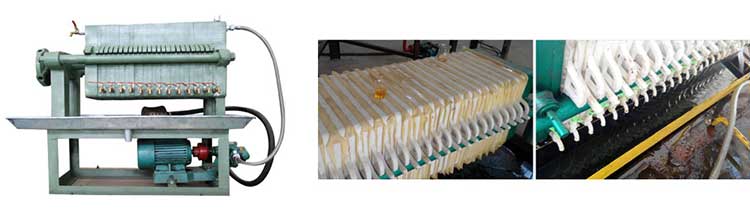
Main Technical Data
| 6LB-250 | No.of filter plates | Dimension of filter plate | Working pressure | Productivity | Power | Dimension | Weight |
|---|---|---|---|---|---|---|---|
| 13pcs | 250*250mm | 0.3-0.4MPa | 100kg/h | 0.75kw | 780*530*670mm | 155kg | |
| 6LB-350 | No.of filter plates | Dimension of filter plate | Working pressure | Productivity | Power | Dimension | Weight |
| 25pcs | 350*350mm | 0.3-0.4MPa | 200kg/h | 1.1kw | 1300*750*700mm | 450kg |
How to choose right oil filter
Before choosing a filter press, you should know exactly what you want to filter, and you should also estimate daily throughput, material moisture, and filter area in order to determine the filter capacity.So you can choose the right press filter according to the technical data of the filter press manufacturer, or you can ask the professional manufacturer for help directly.